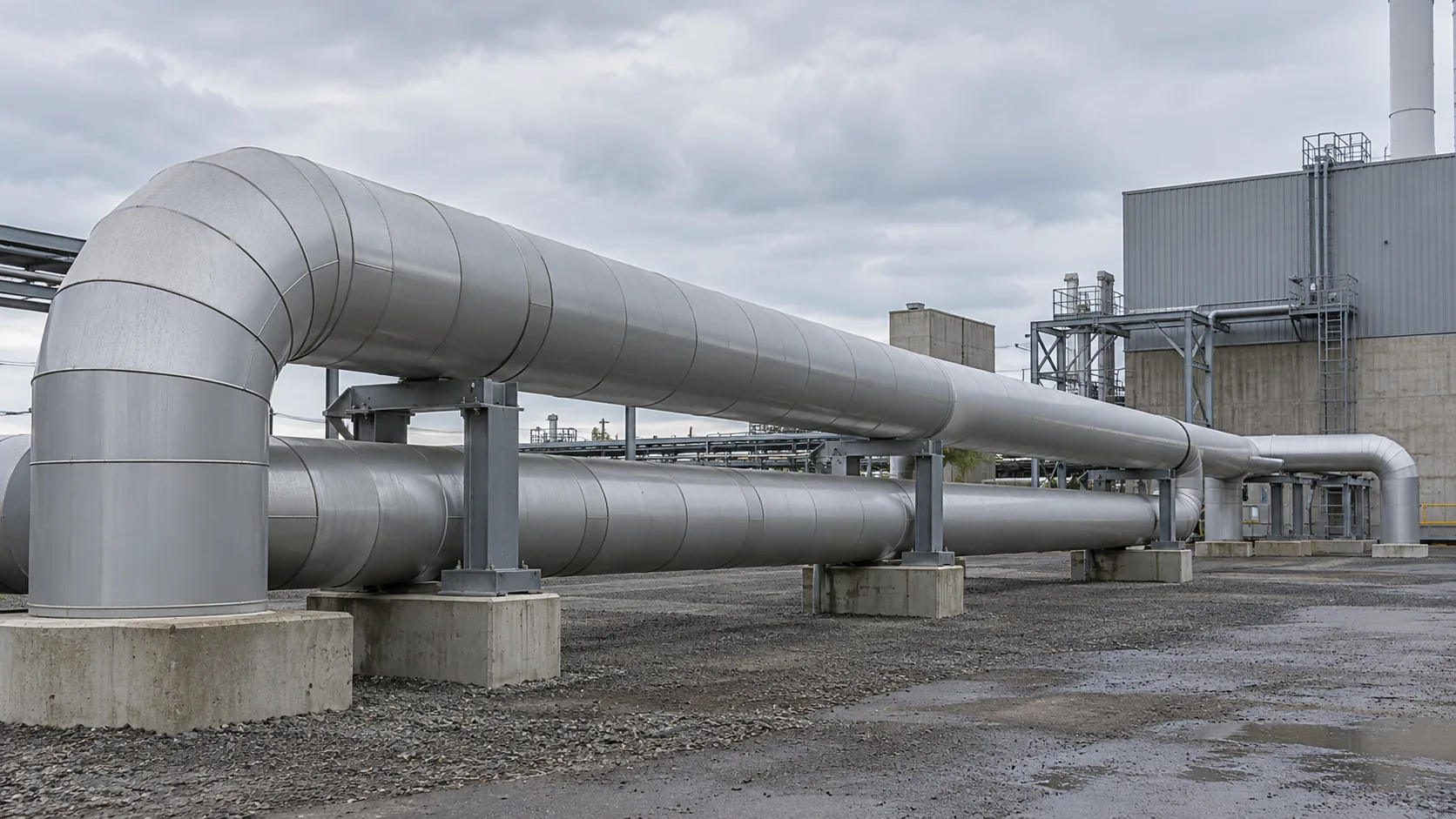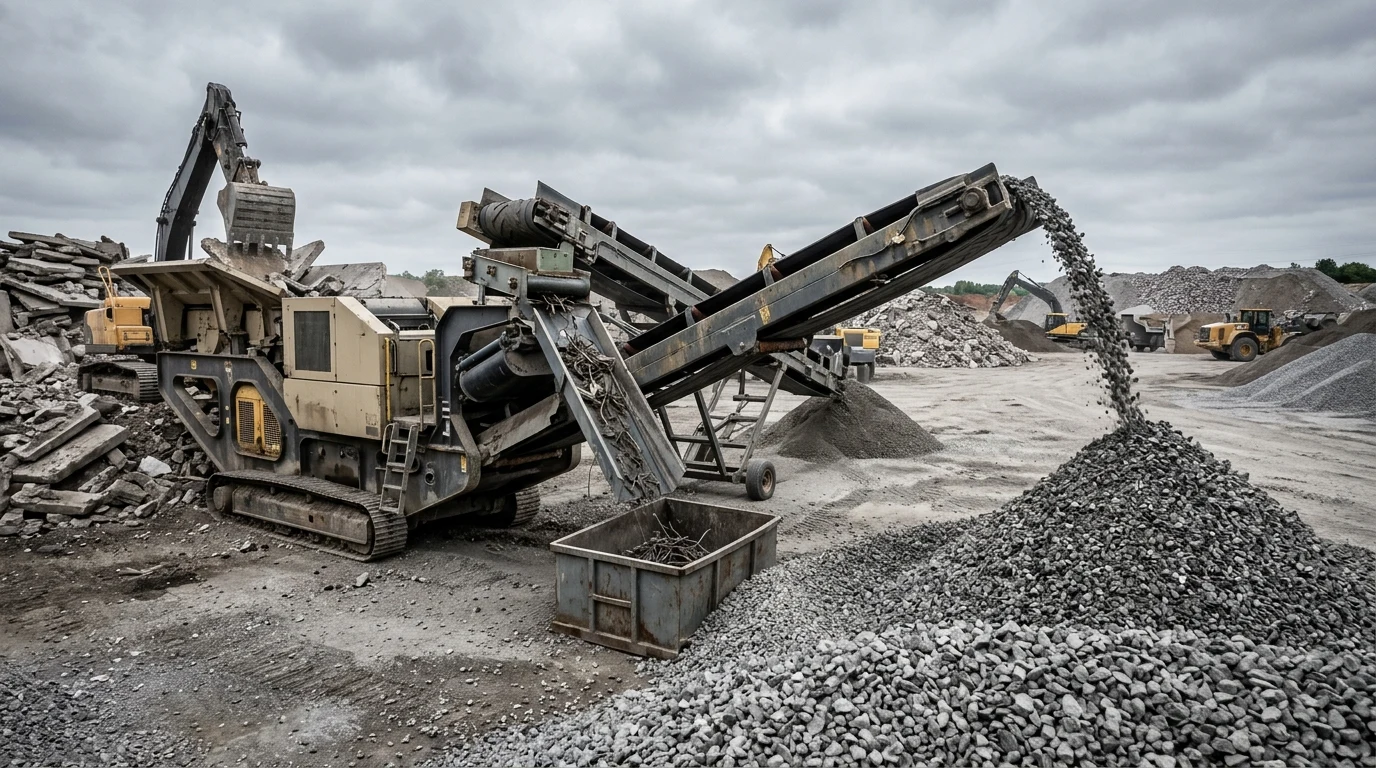
Converting demolished building rubble into structural recycled concrete aggregate requires strict separation of load-bearing precast concrete from masonry brick, interior gypsum plaster, and recycled asphalt before crushing begins. Around 17.2 million tonnes of debris had been generated from damaged and destroyed residential buildings in government-controlled areas of Ukraine as of September 2025. Around 11.7 million tonnes of residential debris remain to be cleared, sorted and processed in Ukraine, and up to 70 percent of this remaining debris, some 8.2 million tonnes, could be recycled and reused.
In Ukraine, EN 206:2013 + A1:2016 provides recommendations only for the use of coarse recycled aggregates with particle size d > 4 mm. Connecting demolition material quality to civil works execution supports the broader reconstruction workflow in Ukraine infrastructure recovery and neighbourhood site clearance in Ukraine housing reconstruction.
| Engineering gate | Governing specification or benchmark | Verified threshold or property range |
|---|---|---|
| Coarse particle size boundary | Ukraine EN 206:2013 + A1:2016 | Recommendations cover only coarse recycled aggregates with particle size d > 4 mm |
| Type A constituent and replacement limits | Type A (Rc90, Rcu95, Rb10-, Ra1-, FL2-, XRg1-) | Maximum coarse aggregate replacement by mass is 50 % in exposure class X0, 30 % in XC1 and XC2, 30 % in XC3, XC4, XF1, XA1 and XD1, and 0% in all other exposure classes |
| Type B constituent and replacement limits | Type B (Rc50, Rcu70, Rb30-, Ra5-, FL2-, XRg2-) | Maximum coarse aggregate replacement by mass is 50 % in exposure class X0, 20 % in XC1 and XC2, and 0% in XC3, XC4, XF1, XA1 and all other exposure classes |
| Type B strength ceiling | Compressive strength boundary | Type B recycled aggregates should not be used in concrete with compressive strength classes > C30/37 |
| Water-soluble sulfate limit | EN 206 coarse recycled aggregate limit | Current water soluble sulfate limit in coarse recycled aggregates is established at 0.2% by EN 206 to keep secondary ettringite formation risk at a reasonable level |
| Unbound base recycled asphalt tolerance | Mn/DOT specification section 3138.2 | Recycled concrete used as dense graded aggregate base can include a maximum of 3% by mass of asphalt binder from recycled asphalt pavement |
Ukraine Building Rubble Stream and Soviet Precast Feedstock Realities
Selective demolition and source sorting determine whether war-damaged residential rubble can enter structural concrete production or must remain in unbound civil engineering fill. The United Nations Development Programme (UNDP) has supported Ukraine in clearing 1 million tonnes of debris. UNDP supported early recovery efforts in 26 war-affected communities across Chernihiv, Dnipropetrovsk, Kharkiv, Kherson, Kyiv, Mykolaiv, Sumy and Zaporizhzhia regions.
UNDP-supported debris clearance operations in Ukraine were carried out under protocols for early detection and handling of hazardous waste, including asbestos-containing materials, and systematic sorting to facilitate subsequent recycling. Verified secondary raw materials from sorted destruction debris are already being used across Ukraine for landfill capping, creating isolation layers, and surfacing roads and footpaths. Feasibility research identifies 50 construction products that could potentially be produced from recycled debris in Ukraine, including cement, ready-mix concrete and precast concrete products.
Advancing from road surfacing and landfill layers to structural concrete depends on the original Soviet precast building elements in the demolition stream. In USSR-era panel buildings in Ukraine, GOST 12504-67 and GOST 9561-66 regulate concrete design strength of at least 20 MPa, while GOST 9818-67 regulates concrete design strength between 20 and 30 MPa. Autoclave cellular and lightweight exterior wall panels under GOST 11118-65 and GOST 11024-72 have design strengths from 3 to 10 MPa and should be excluded from the recycling cycle for obtaining Type A aggregates.
Even when low-strength exterior cellular panels are stripped prior to primary crushing, dense precast panels carry a high proportion of hardened cement paste. In Soviet precast concrete under SN 386-68, the volume of coarse aggregate is expected to be 40-50%, while the volume of old mortar is 50-60%, with the cement paste itself being about 24-33 %. Crushing equipment selection directly affects how much of that mortar breaks into fine powder during processing. In RCA crushing operations, jaw crushers usually accept larger feed of 24 inches or more and tend to produce fewer fines, whereas impact crushers tend to crush both mortar and aggregate and use a feed size of 12 inches or less.
Coarse Constituent Categories and Structural Replacement Boundaries
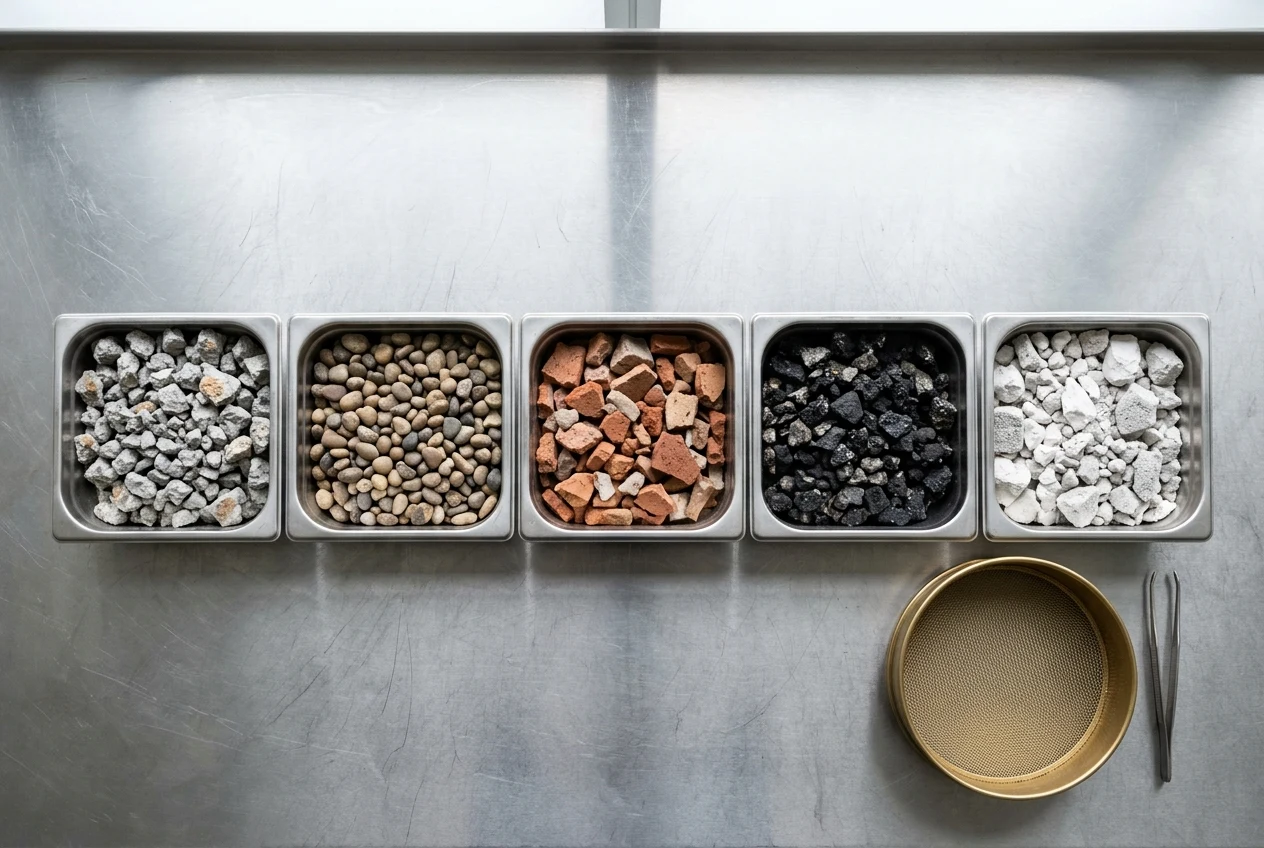
Once rubble is crushed and screened above the coarse threshold, constituent hand-sorting and particle density tests establish whether a stockpile qualifies as Type A or Type B aggregate. Constituent Rc comprises concrete, concrete products, mortar, and concrete masonry units, while constituent Rb comprises clay masonry units such as bricks and tiles, calcium silicate masonry units, and aerated non-floating concrete. Constituent Ra is bituminous materials, FL is floating material in volume, Rg is glass, and X includes cohesive clay and soil, non-floating wood, plastic, rubber, and gypsum plaster.
Type A coarse recycled aggregates should include at least 90% (Rc90) recycled concrete and mortar, or at least 95% (Rcu95) recycled concrete, mortar, aggregate and natural stone. Type A coarse recycled aggregate may not contain more than 10% (Rb10-) clay and calcium silicate masonry units and aerated (non-floating) concrete, and no more than 1% (Ra1-) bituminous materials. By comparison, BS 8500-2:2006 fully specifies RCA for use in concrete as material containing Rc > 83.5% by mass and Rb < 5% by mass.
Physical density, particle shape, fragmentation resistance, and setting-time limits further govern structural acceptance across both aggregate classes:
- Oven dried particle density ρrd under Clause 5.4.1 is ≥ 2,10 Mg/m3 for Type A recycled coarse aggregates and ≥ 1,70 Mg/m3 for Type B recycled coarse aggregates.
- For both Type A and Type B recycled coarse aggregates (A+B), Flakiness Index under Clause 4.6 is ≤ Fl40 and resistance to fragmentation under Clause 5.2 is ≤ LA50.
- In the CEN sixth-draft Table E.32, for Type A+B recycled coarse aggregates, water soluble sulfate content under Clause 6.4.3 is ≤ SS0,7 and influence on the initial setting time under Clause 6.7.1 is ≤ A40.
- For special applications requiring high quality surface finish, the floating material constituent FL should be limited to category FL0.2-.
Exposure conditions and target concrete strength classes set the upper mass replacement boundaries for qualified stockpiles. For Type A recycled coarse aggregate (Rc90, Rcu95, Rb10-, Ra1-, FL2-, XRg1-), the maximum coarse aggregate replacement by mass is 50 % in exposure class X0, 30 % in XC1 and XC2, 30 % in XC3, XC4, XF1, XA1 and XD1, and 0% in all other exposure classes. Type A recycled aggregates from a known source may be used in exposure classes to which the original concrete was designed with a maximum percentage of replacement of 30 %. For Type B recycled coarse aggregate (Rc50, Rcu70, Rb30-, Ra5-, FL2-, XRg2-), the maximum coarse aggregate replacement by mass is 50 % in exposure class X0, 20 % in XC1 and XC2, and 0% in XC3, XC4, XF1, XA1 and all other exposure classes. Type B recycled aggregates should not be used in concrete with compressive strength classes > C30/37.
Masonry Brick, Recycled Asphalt, and Gypsum Sulfate Contamination Limits
Masonry brick, bituminous pavement chunks, and interior gypsum plaster degrade recycled concrete through distinct physical and chemical mechanisms: porosity-driven strength loss, air-void and bond disruption from asphalt, and internal sulfate expansion. Laboratory constituent testing demonstrates how clay brick inclusion lowers particle density while driving up water absorption and Los Angeles abrasion loss compared with unbound natural gravel and crushed concrete.
| Property and test metric | Measured benchmark values across unbound stone, crushed concrete, and clay brick |
|---|---|
| SSD density (kg/m3) and water absorption (%) in Table 2 | 2550 and 1.2 for unbound stone RU-N, 2385 and 5.5 for crushed concrete RC-35, 2390 and 4.8 for RC-60, 2300 and 8.0 for brick RB-1, 2120 and 17.2 for RB-2, and 1940 and 28.0 for RB-3 |
| Acid-soluble sulfates (%) and Los Angeles coefficient (LA) in Table 2 | 0.1 and 22 for RU-N, 0.5 and 35 for RC-35, 0.5 and 29 for RC-60, 0.0 and 48 for RB-1, 1.9 and 60 for RB-2, and 0.4 and 51 for RB-3 |
Bituminous recycled asphalt fragments enter demolition stockpiles when site roadways, courtyard pavements, or roof waterproofing layers are excavated alongside collapsed building superstructures. ACPA (2009) suggests limiting asphalt concrete contaminants in RCA for concrete paving to 1 percent by volume, although 30 percent or more has been used in the lower lift of two-lift pavements. When crushed concrete containing recycled asphalt is redirected from structural concrete to unbound road subbase, higher bituminous binder levels are acceptable. Under Mn/DOT specification section 3138.2, recycled concrete used as dense graded aggregate base can include a maximum of 3% by mass of asphalt binder from recycled asphalt pavement.
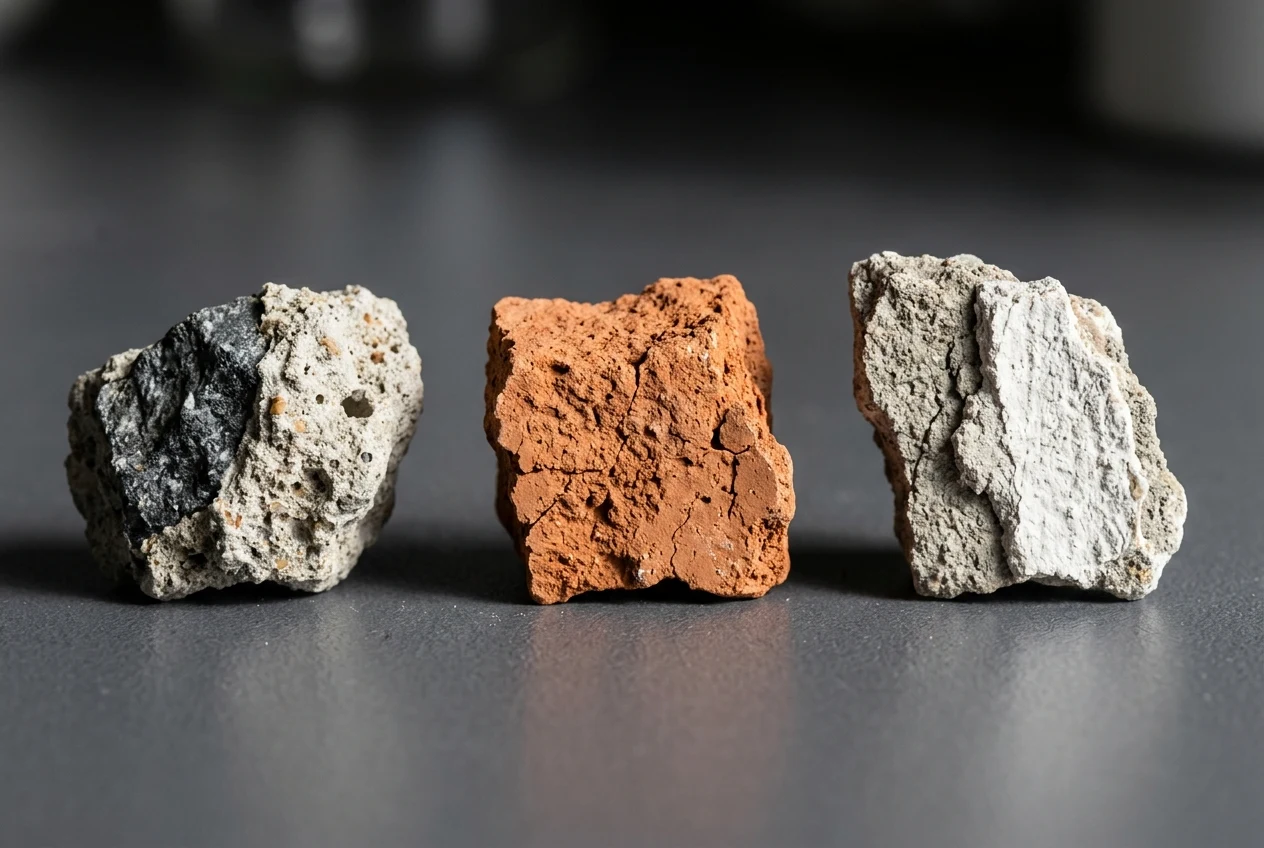
Gypsum residues contaminating fine recycled aggregates (FRA) are an internal source of sulfates where, unlike the DEF reaction, high curing temperatures are not needed to observe the swelling effect. To keep the risk for secondary ettringite formation at a reasonable level, the current water soluble sulfate limit in coarse recycled aggregates is established at 0.2% by EN 206. Only water-soluble sulfates contribute to secondary ettringite formation, and an elevated temperature to extract the sulfates was not used in modified EN 1744-1 testing because gypsum exhibits a retrograde solubility.
National aggregate guidance also distinguishes between water-soluble gypsum sulfates and total acid-soluble sulfates bound within adhered cement mortar:
- Under Irish guidance SR 16:2016, the Acid Soluble Sulfate limit is 0.8% for recycled concrete aggregates only (table B.8), while the limit of 0.2% remains for all natural aggregates.
- Under S.R. 16:2016 factory production control guidance amending IS EN 12620:2002 + A1:2008 Tables H.1–H.3, sulfur-compound minimum test frequency is increased to twice per year (every six calendar months).
- ACPA (2009) suggests limiting contaminants in RCA to 0.5 percent by weight for gypsum, 0 percent for glass, and 0.6 lb/yd3 for chlorides, and agencies should consider waiving magnesium and sodium sulfate soundness tests.
- In Table 1 of WSDOT comparisons, typical virgin aggregate vs RCA properties are 7 – 21 percent vs 18 – 59 percent for sodium sulfate soundness mass loss, 4 – 7 percent vs 1 – 9 percent for magnesium sulfate soundness mass loss, and 0 – 1.2 kg/m3 vs 0.6 – 7.1 kg/m3 for chloride content.
Adhered Mortar Water Absorption, Oven-Drying Errors, and Pre-Saturation Kinetics
Porous old mortar adhered to crushed concrete particles absorbs batching water rapidly during mixing, requiring controlled pre-saturation rather than oven-dried water compensation. Typical virgin aggregate vs RCA properties are 0.8 – 3.7 percent vs 3.7 – 8.7 percent for absorption capacity, 2.4 – 2.9 vs 2.1 – 2.4 for specific gravity, and 15 – 30 percent vs 20 – 45 percent for LA abrasion test mass loss. In plant testing of limestone natural aggregates against Type A recycled fractions, Water Absorption (%) is 0.77 for natural coarse CNA-1 (4/10) and 0.73 for CNA-2 (8/20), compared to 5.73 for fine FRCA (0/4) with Los Angeles coefficient 35.77, 5.62 for coarse CRCA-1 (2/10), and 5.16 for coarse CRCA-2 (8/20), with water absorption below the SC-BOE limit of 7 and FRCA Los Angeles below 40.
Standard laboratory oven-drying procedures distort how much mixing water coarse recycled aggregate actually absorbs in a batching plant. Drying RCA at 105°C dehydrates some sulfo-aluminates, affecting porosity and measured water absorption so that water intake by RCA is often over-estimated.
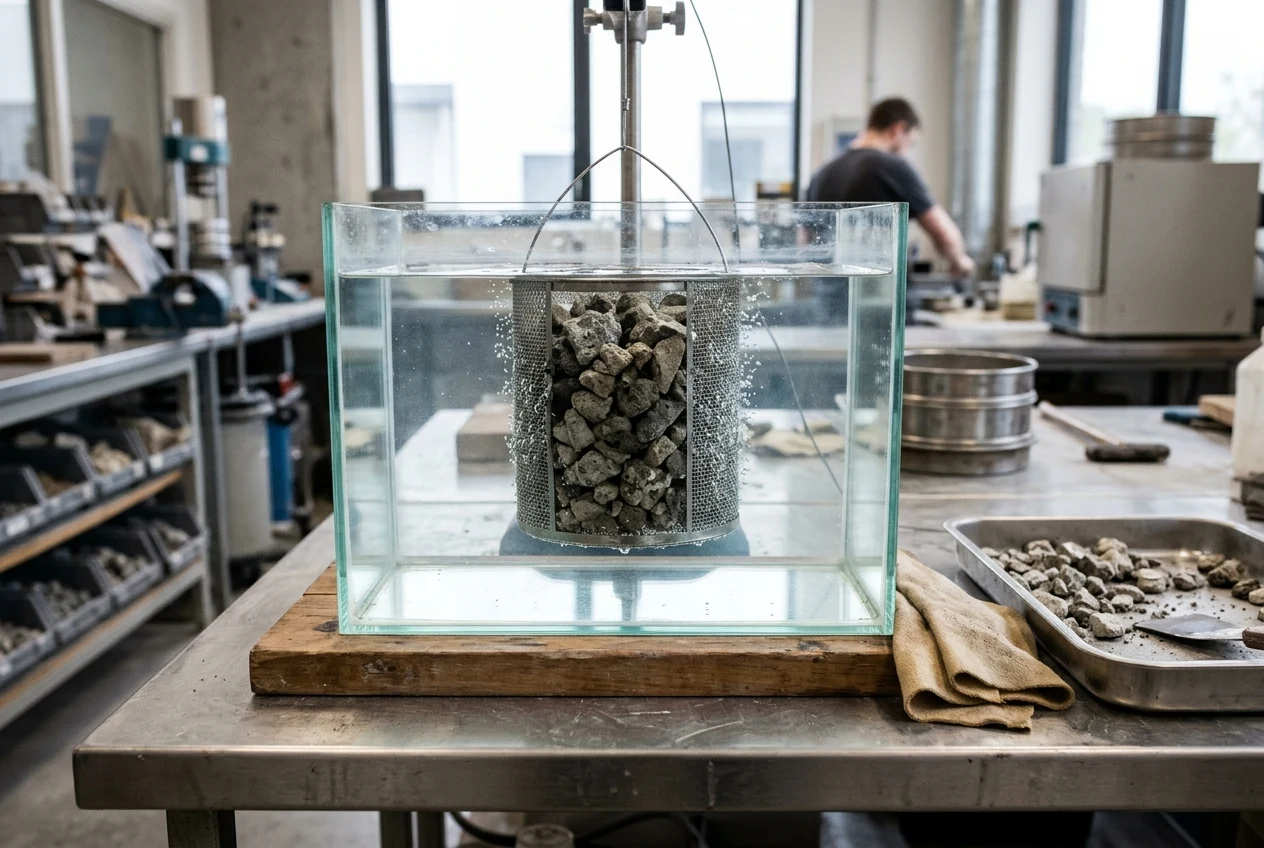
Hydrostatic soaking measurements show that rapid water absorption occurs within the opening minutes of immersion. In hydrostatic weighing pre-saturation tests of mixed recycled aggregates, complete saturation was reached after 10 days (up to 56% in the first hour), with Absorption (%) reaching 47.5 at 3 min, 50.2 at 5 min, and 56.1 at 60 min.
When batching plants do not pre-saturate recycled aggregate or adjust admixture dosing, both fresh workability and hardened mechanical properties shift substantially:
- To produce the same workability as a conventional mixture, approximately 5 percent additional water may be needed if only coarse RCA is utilized, and approximately 10 to 15 percent additional water if both coarse and fine RCA are utilized.
- Absent the use of set-retarding admixtures, RCA concrete produced from crushed ready-mixed concrete had initial and final set times roughly 30 to 60 minutes shorter than those of the concrete control mixture.
- Using RCA as coarse aggregate reduces compressive strength by 0% to 24% and modulus of elasticity by 10% to 33%, whereas using RCA as coarse and fine aggregate reduces compressive strength by 15% to 40% and modulus of elasticity by 25% to 40%.
- In Table 2 of FHWA hardened concrete comparisons, drying shrinkage is 20% to 50% greater with coarse RCA only and 70% to 100% greater with coarse and fine RCA, while creep is 30% to 60% greater and permeability is 0% to 500% greater for both.
For winter structural repair pours where freeze-thaw durability and curing moisture control are critical, coordinate aggregate pre-saturation and water-to-cement ratio controls with the placement procedures in cold weather concrete protection for reconstruction pours.
Structural Concrete Design Modifiers and Unbound Road Base Routing Checklist
For lower recycled aggregate substitution ratios (αRA ≤ 0.2 for reinforced concrete, RC), it is assumed that there are no changes to RAC properties. Special provisions apply for Type A RA substitution ratios 0.2 < αRA ≤ 0.4 for RC and αRA ≤ 0.2 for prestressed concrete (PC), whereas for Type B RA the limiting substitution ratios should be decreased by 50%.
In Table 1 of the Eurocode provisions for recycled aggregate concrete, RAC design corrections as a function of αRA are (1 − 0.25 * αRA) for modulus of elasticity, (1 + 0.8 * αRA) for shrinkage strain, and (1 + 0.6 * αRA) for creep coefficient. For reinforced concrete and prestressed concrete when αRA > 0, the values of cmin,dur should be increased by 5 mm for exposure to carbonation and 10 mm for exposure to chloride ingress.
Worked Example: Structural Design Modifiers for Recycled Aggregate Concrete
For example, assume a recycled aggregate substitution ratio αRA of 0.3 for reinforced concrete.
Example calculation at a substitution ratio of 0.3: applying coefficients 0.25, 0.8, and 0.6 yields a modulus of elasticity multiplier of 0.925, a shrinkage strain multiplier of 1.24, and a creep coefficient multiplier of 1.18.
Boundary Between Concrete Aggregate and Unbound Granular Subbase
Demolition rubble that exceeds concrete masonry, gypsum sulfate, or water absorption limits still serves civil engineering road and foundation subbase needs under a separate product standard. In the European harmonized aggregate product standard framework, EN 12620 governs aggregates for concrete (paired with national guidance SR 16), whereas EN 13242 governs aggregates for unbound and hydraulically bound materials (paired with SR 21). For Annex E unbound granular fill (hardcore), requirements are resistance to fragmentation LA 30, magnesium sulfate soundness MS25, water absorption WA242, mudrock content ≤ 10%, acid-soluble sulfate AS0,2, and total sulfur S > 1% unsuitable.
Building Rubble Impurity, Water Absorption, and Target Application Screening Checklist
Use the engineering verification workflow below to classify each demolished building stockpile and assign it to structural concrete, non-structural concrete, or unbound civil engineering fill:
| Screening gate | Verification action and test protocol | Routing decision boundary |
|---|---|---|
| Hazardous waste and asbestos clearance | Per UNDP-supported clearance practice: execute protocols for early detection and handling of hazardous waste, including asbestos-containing materials | Per UNDP-supported clearance practice: perform systematic sorting of demolition debris to facilitate subsequent recycling |
| Exterior lightweight panel exclusion | Identify autoclave cellular and lightweight exterior wall panels under GOST 11118-65 and GOST 11024-72 with design strengths from 3 to 10 MPa | Exclude from the recycling cycle for obtaining Type A aggregates |
| Primary and secondary crusher feed sizing | Feed larger concrete rubble (24 inches or more) into jaw crushers that tend to produce fewer fines | Use impact crushers for feed size of 12 inches or less where crushing both mortar and aggregate is acceptable |
| Water-soluble sulfate extraction test | Measure water-soluble sulfates that contribute to secondary ettringite formation using modified EN 1744-1 testing | Do not use an elevated temperature to extract the sulfates because gypsum exhibits a retrograde solubility |
| Pre-saturation soaking control | Track mixed recycled aggregate soaking via hydrostatic weighing, where complete saturation is reached after 10 days and up to 56% in the first hour | In hydrostatic tests, mixed recycled aggregates reached 47.5% / 50.2% of complete saturation at 3 / 5 min (56.1% at 60 min; full saturation after 10 days); that study used 3- or 5-min pre-soaks before batching |
Sources
- United Nations Development Programme and Ministry for Development of Communities and Territories of Ukraine, Implementation of the Debris Recycling and Reuse System in Ukraine: Feasibility Study Summary Report
- Cabinet of Ministers of Ukraine and United Nations Development Programme, Ukraine Debris Clearance and Safe Reconstruction Release
- RILEM Technical Letters, Challenges in Material Recycling for Postwar Reconstruction
- European Committee for Standardization Technical Committee on Concrete, Draft Text for Annex E on the Use of Recycled Aggregates in Concrete
- Building Materials and Structures, Eurocode Provisions for Recycled Aggregate Concrete
- Magazine of Concrete Research, Recycled Aggregates in Concrete: A Performance-Related Approach
- Materials Journal, Valorization of Fine Recycled Aggregates Contaminated with Gypsum Residues
- Irish Concrete Federation, National Guidance on Aggregates for Concrete
- Materials Journal, Concrete with Recycled Concrete Aggregate
- Materials Journal, Pre-Saturation Technique of the Recycled Aggregates: Solution to the Water Absorption Drawback
- Federal Highway Administration, Technical Brief on the Use of Recycled Concrete Aggregate in Concrete Paving Mixtures
- Federal Highway Administration, Transportation Applications of Recycled Concrete Aggregate: State of the Practice National Review
- Washington State Department of Transportation, Engineering Research Report on Recycled Concrete Aggregate
- Institute of Geologists of Ireland, Aggregates Criteria for Unbound and Hydraulically Bound Materials