
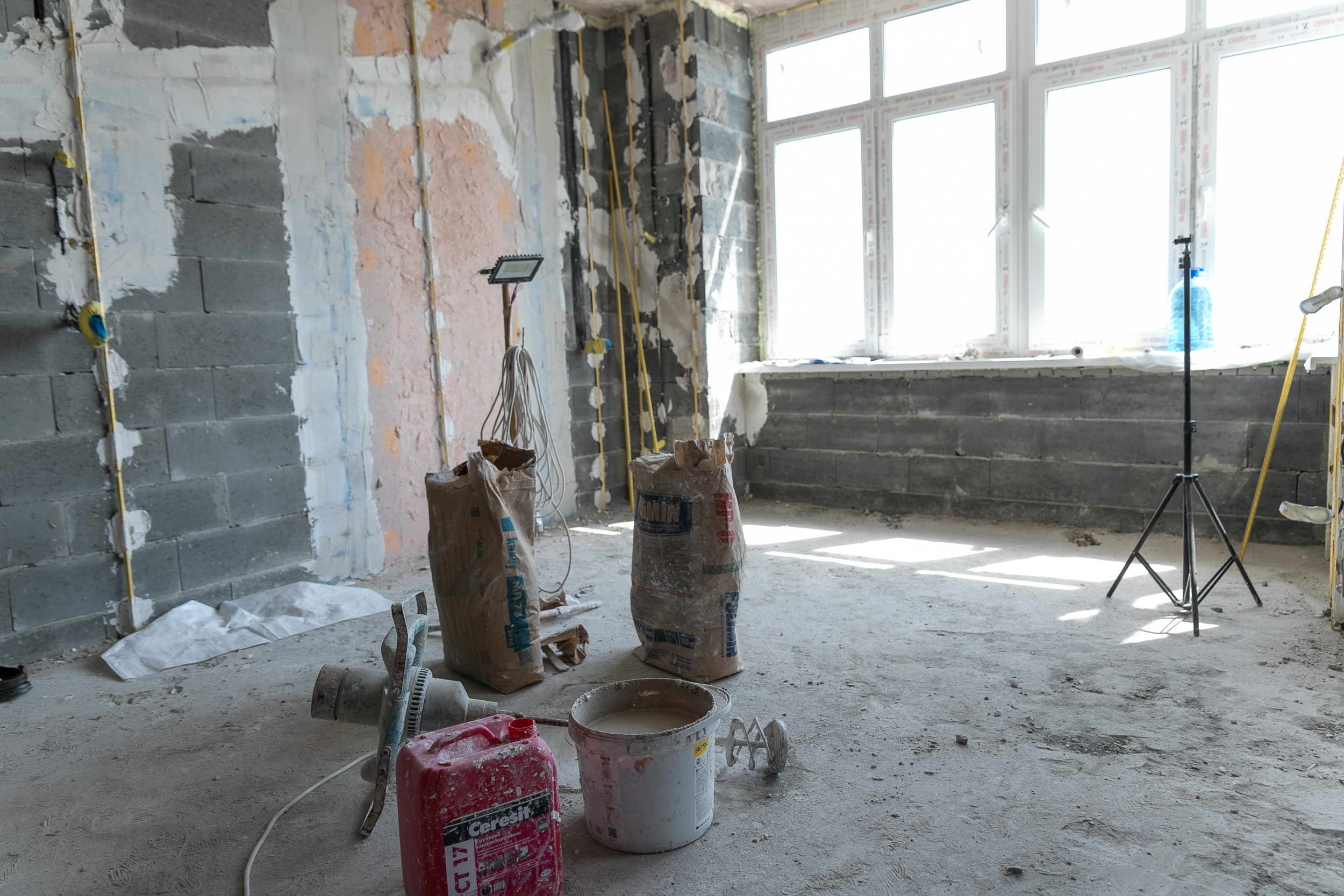
Ukraine’s housing reconstruction includes urgent repairs already under way, the rebuilding of severely damaged homes, and work on the neighbourhoods around them. A count of repaired dwellings answers only part of the question of whether people can return.
The scale figures also need a date. The joint fifth Rapid Damage and Needs Assessment, or RDNA5, reported that 14% of housing had been damaged or destroyed as of 31 December 2025, affecting over three million households. Published on 23 February 2026, that assessment is a dated baseline, rather than a survey of conditions on this article’s October update date. World Bank RDNA5 release.
Repairs and rebuilding involve different work
A broken window, a damaged roof and a compromised building structure call for different assessments and interventions. Reports that combine them under “homes restored” can obscure the work completed. Readers need the project’s definition of a repaired unit, the damage category, and whether shared parts of an apartment building are included.
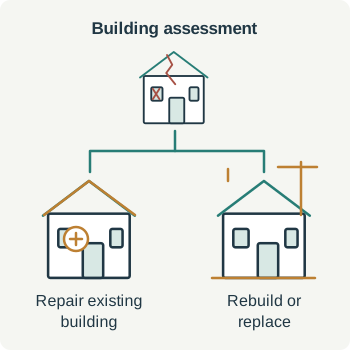
The World Bank’s August 2023 launch description of the Housing Repair for People’s Empowerment project, HOPE, gives a concrete example. Its design included light repairs such as windows and roofs, as well as repair funding for moderately damaged multifamily buildings that did not require structural repairs. That describes the project at launch; it should not be read as current eligibility guidance. HOPE launch description.
Shared spaces matter too. A July 2025 World Bank feature describes a HOPE approach that groups buildings by location and damage for joint repairs, including shared public spaces, with attention to energy efficiency and accessibility. This gives readers another useful distinction: repairing an individual apartment and rehabilitating a building or residential area have different scopes. World Bank housing recovery feature.
Site preparation is part of reconstruction
Construction photographs usually show the visible stage of recovery. A project may also need professional hazard assessments, debris management or work on access before building can proceed.
UNDP’s February 2026 account of debris operations describes hazardous-material identification and safe handling, including asbestos-containing material, alongside sorting that allows suitable material to be reused. These are specific managed activities. A cleared-looking plot alone does not establish that the relevant assessments or protections are complete. UNDP debris management account.
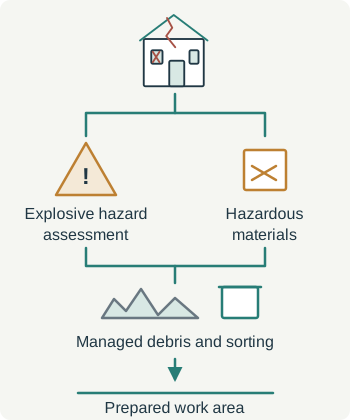
For an international reader following a project, the useful questions concern evidence: who assessed the site, which work the contract covers, and what the completion record confirms. This is a way to interpret reporting, not a checklist for entering or clearing damaged property.
A repaired dwelling sits within a community
The UN’s Ukraine Community Recovery Fund describes recovery at the level of an area and its residents. Its scope brings housing together with mine action, energy, critical infrastructure and social services, while supporting local authorities and community participation. Official fund overview.
That wider view helps explain why housing completion and return should be reported separately. In a hypothetical neighbourhood, a roof repair could be complete while the water network remains unreliable or the route to a school remains disrupted. The repair still matters. It simply cannot establish all the conditions a household weighs when considering return.
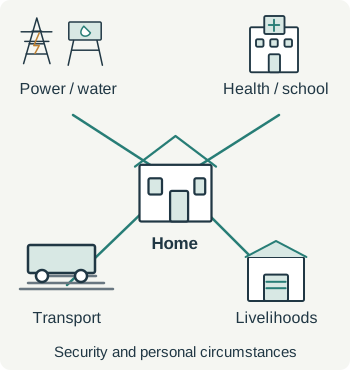
Security, access to services and individual circumstances also prevent a construction statistic from becoming a prediction about who will return. A recovery report is more informative when it distinguishes completed physical work, restored services and residents’ decisions.
Read a housing recovery claim at its stated scope
Before comparing two announcements, check whether both count the same thing: dwellings, buildings, households or people. Then look for the reporting period, the damage and repair categories, and whether “completed” means a contract finished, a building accepted or homes occupied. An approved programme and completed repairs belong to different stages.
The infrastructure recovery guide explains the services around a home. The reconstruction funding guide follows the distinction between finance and delivery. Our sources page explains how this independent information site uses original documents.