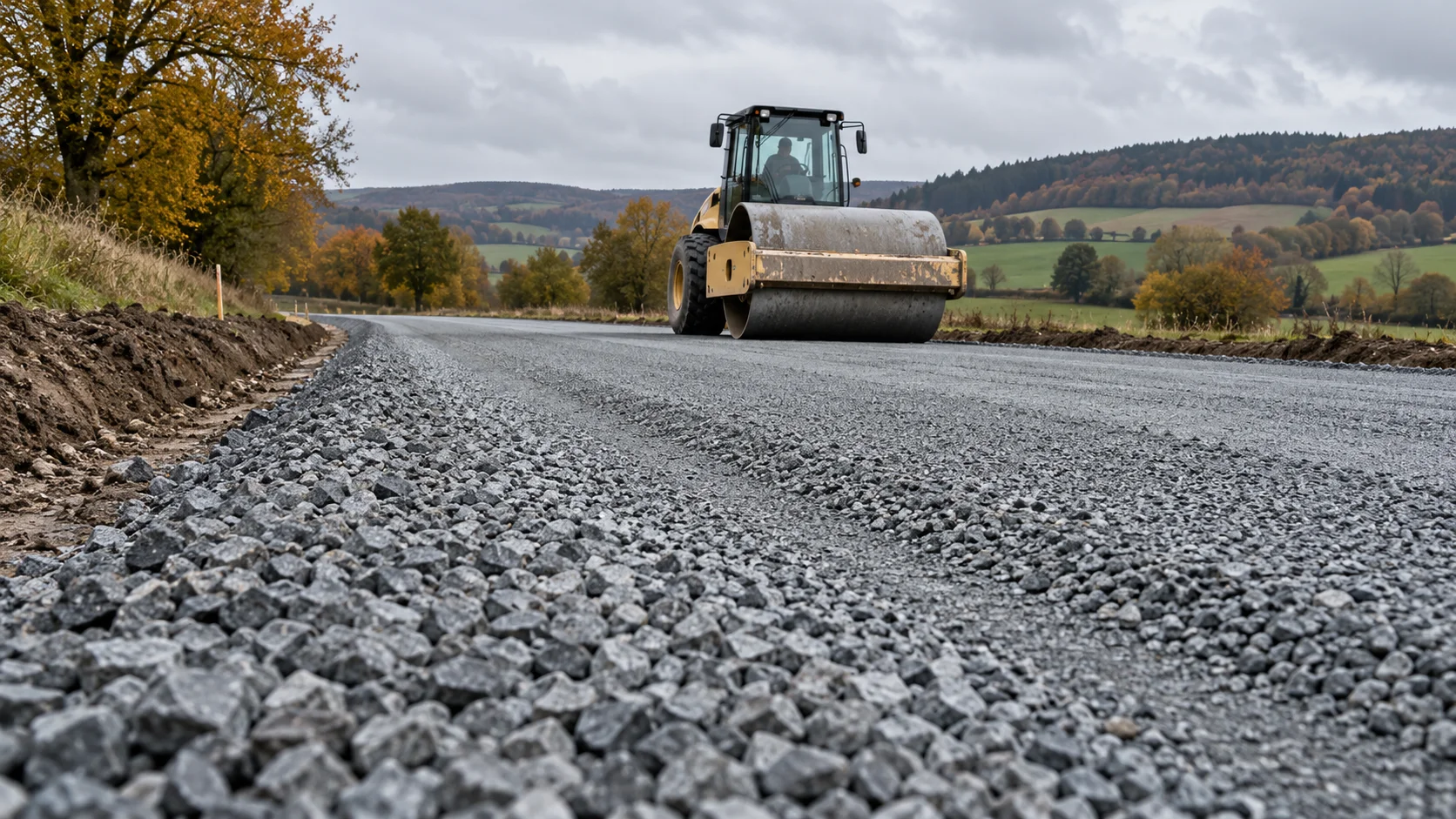
For aggregate base course compaction on restored roads, start with the contract: identify the material, compacted lift limit, moisture requirement, density reference and plate-test acceptance criteria before placing the base.
The project contract governs applicable requirements.
Use the specification examples below to organize road-base work within Ukraine’s infrastructure recovery. Keep each named specification’s material, test method and acceptance requirement together in the work package.
Prepare the aggregate and supporting layer
In the FHWA experimental pavement guidelines, dense-graded aggregate base is an untreated, crushed material.
For that aggregate base, the final aggregate mixture must be dense graded.
Michigan’s aggregate placement requirements call for a uniform gradation, free of contamination and segregation.
Under those Michigan requirements, aggregate base must not be placed on frozen, soft, unstable or rutted supporting layers.
FHWA identifies lack of supporting-layer support as a factor in failure to achieve compaction.
Wet soil on construction vehicle tires or tracks can contaminate newly placed aggregate.
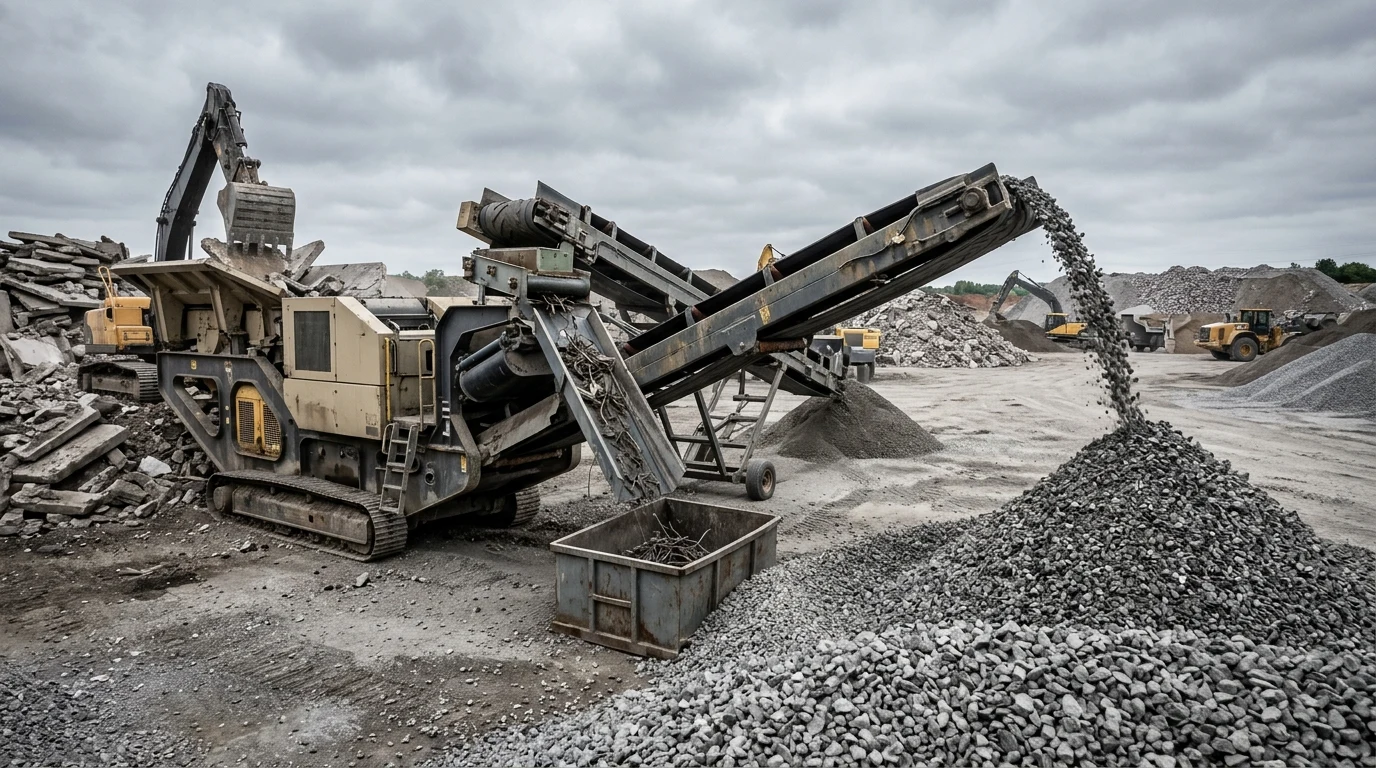
Before placement, review the receiving surface and delivery route alongside the material approval. For the upstream material question, see recycled concrete aggregate from building rubble.
Set the compacted lift thickness
Record the specified compacted lift thickness separately from loose placement observations and total base thickness. Select the applicable specification example below.
Mile High Flood District placement
The maximum compacted layer thickness is six (6) inches.
FHWA experimental dense-graded aggregate base
Maximum lift thickness shall be 152 mm compacted.
Use the chosen compacted limit when planning placement and checking the completed lift. Retain the specification’s original units in the inspection record.
Control moisture through the lift
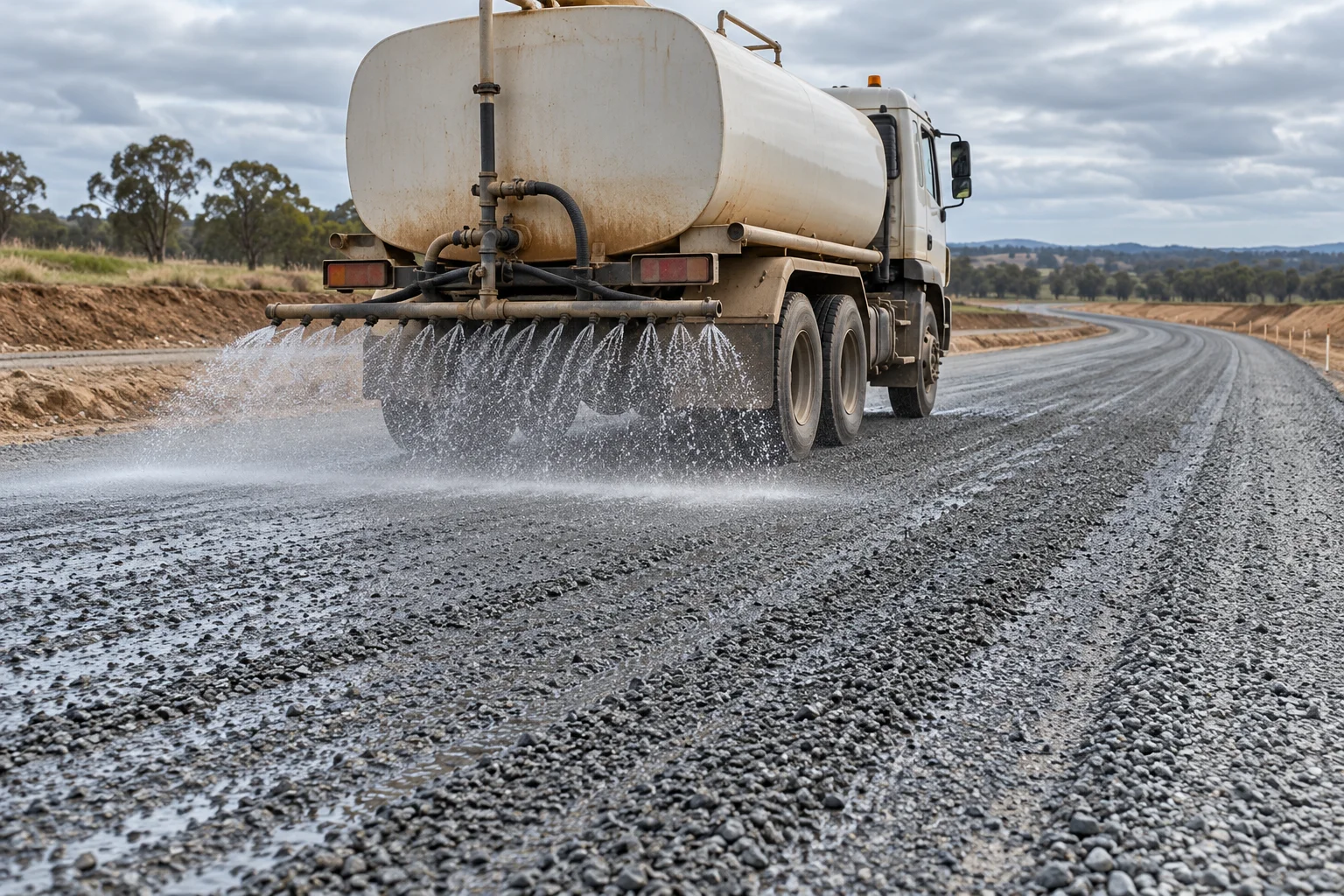
Compaction curves typically have a peak corresponding to maximum dry unit weight at optimum moisture content.
Where a variety of soils are used, a moisture-density relationship should be established for each major soil type or mixture expected at the site.
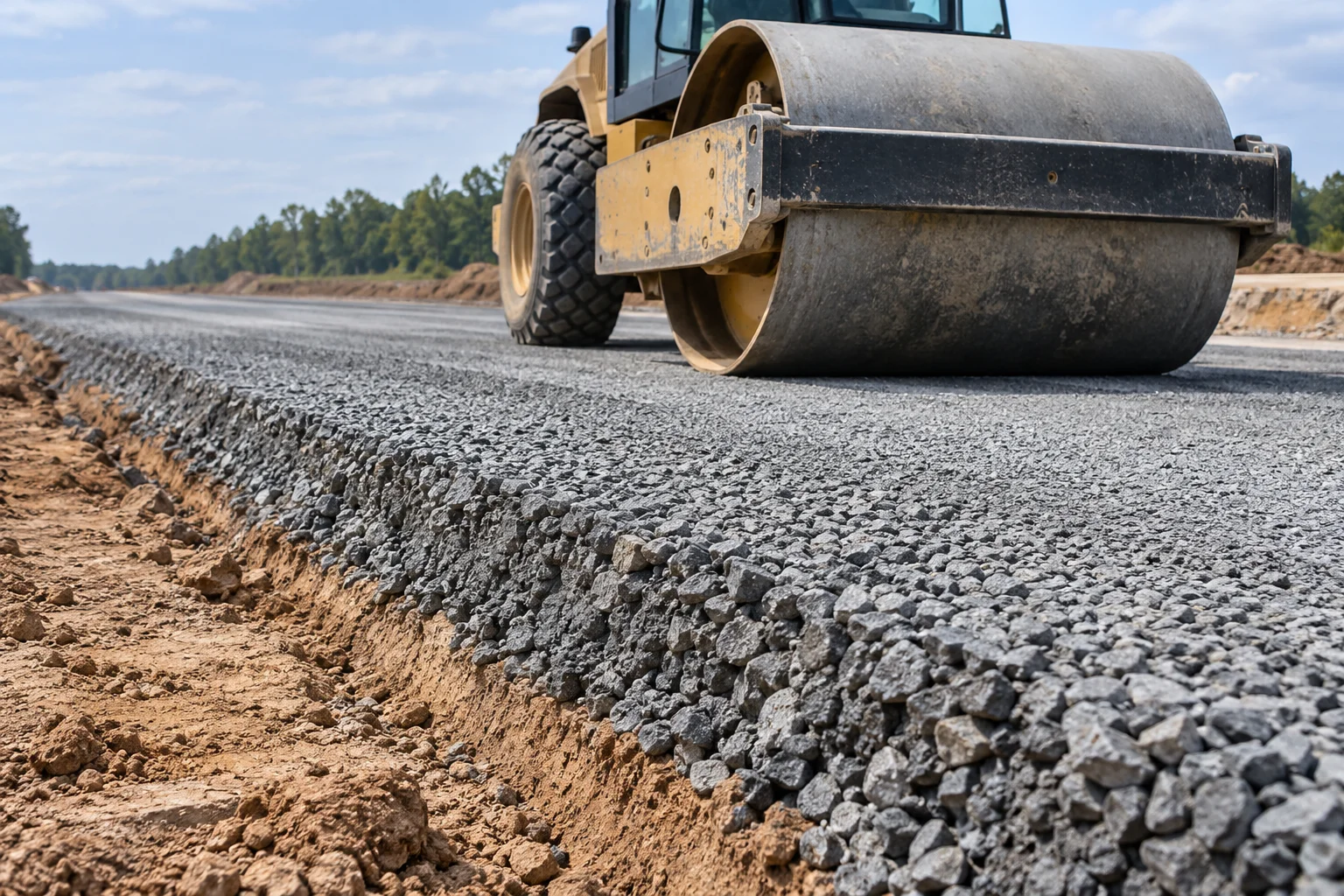
For aggregate base compaction, NCDOT states that compaction should occur at uniform moisture at or near optimum for the material.
The base material should be scarified full depth prior to adding water to allow uniform distribution.
Mile High Flood District pavement-foundation base
Pavement foundation aggregate base is placed within two percent (2%) of optimum moisture.
Pavement foundation aggregate base must reach a minimum of 100% of Maximum Modified Proctor Density.
The referenced Modified Proctor density method is ASTM D1557.
Michigan base under hot mix asphalt
Moisture must be no greater than optimum under hot mix asphalt pavement.
Enter the applicable moisture requirement beside its density target before conditioning the material. Check the field observations against that paired requirement.
Match field density to its laboratory reference
Relative compaction is the percentage ratio of in-situ density to the maximum density obtainable in the specified compaction test.
NCDOT states that a new unit weight should be obtained for each source of material, when a significant change occurs in the composition of the material or when deemed necessary.
Keep the laboratory report, material source and field result together. The following named requirements provide separate examples for the acceptance record.
FHWA experimental dense-graded aggregate base
Maximum dry density and optimum moisture content are determined by AASHTO T180, method D.
DGAB compaction must average not less than 95 percent of AASHTO T180 density.
Michigan pavement-specific density targets
Each aggregate base layer under hot mix asphalt must reach at least 98 percent of maximum unit weight.
Each aggregate base layer under concrete must reach at least 95 percent of maximum unit weight.
For each result, record the pavement application and the named laboratory reference as well as the percentage.
Interpret the plate load test
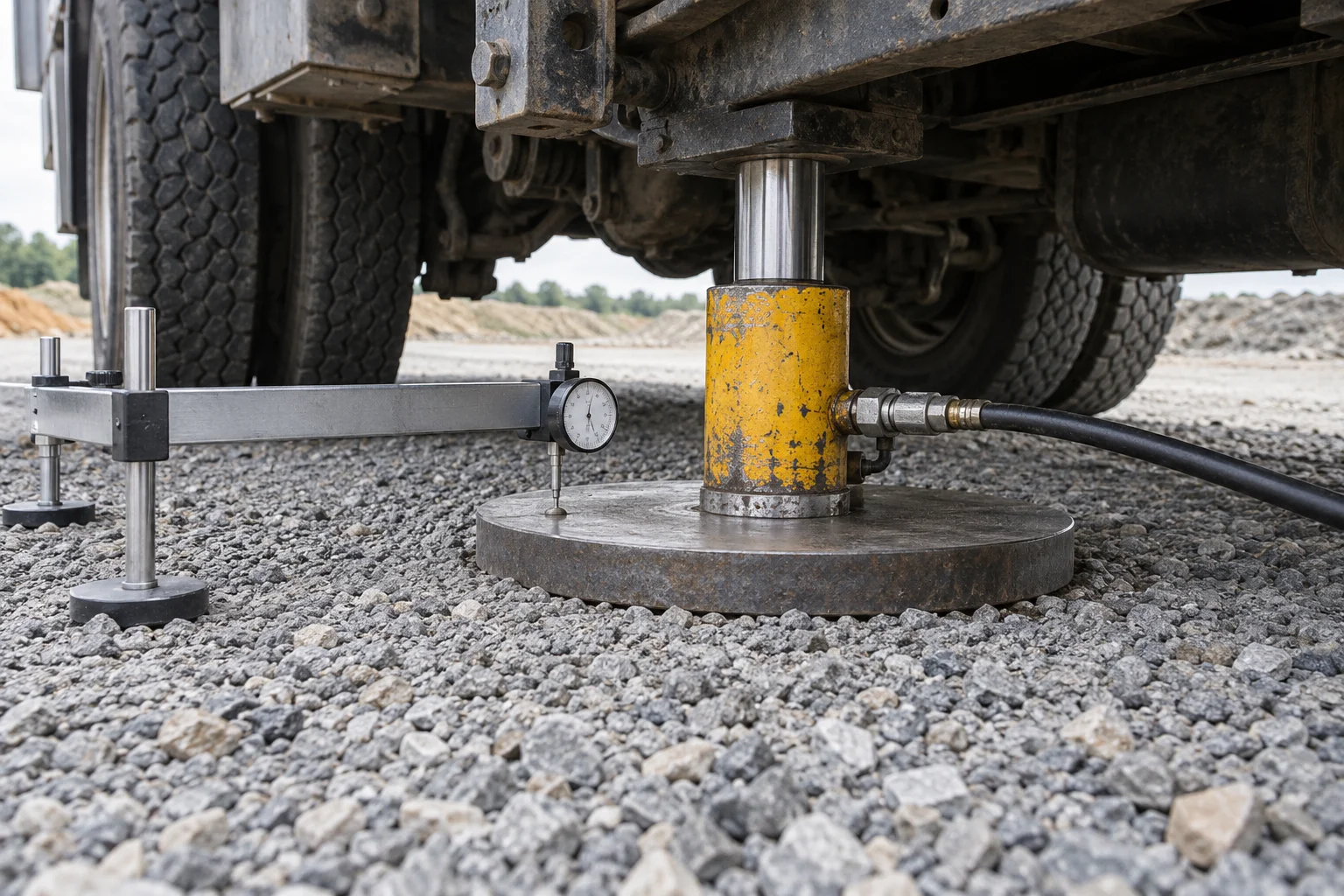
Static plate loading measures the bearing capacity of unbound layers.
In VTI’s static plate-loading procedure, a circular steel plate is loaded using a jack against a counterweight.
Plate deformation is recorded at each loading step.
Ev1 and Ev2 are calculated from loading and deformation values.
Infrastructure Malta ratio requirement
The Ev2/Ev1 relation shall not exceed 2.2, subject to the stated higher-ratio exception.
A higher ratio is permissible if Ev1 is at least 60% of the required Ev2 value.
Read the exception against the required value when reviewing this specification example. Keep the plate-test report and field-density report as separate items in the acceptance package.
Respond to compaction problems
Review the supporting layer, moisture condition and segregation before deciding on corrective work.
In FHWA’s base and subbase troubleshooting guidance, excess moisture can often be dried by blading and allowing evaporation.
Drying and recompacting should correct the problem in the majority of cases.
Persistent compaction problems may warrant removal and replacement.
Under FHWA’s experimental dense-graded aggregate base requirements, areas with excessive segregation shall be removed and replaced with proper aggregate.
Record the observed problem, corrective work and subsequent test result together.
Assemble the road-base acceptance record
Use this editorial checklist to organize the handover. Enter the project’s requirements and results against each item.
- Location and layer: work area, pavement application and placement record.
- Material: approved source, grading designation and laboratory report.
- Placement: compacted lift limit, thickness observations and supporting-layer inspection.
- Moisture: specified window, measured condition and conditioning work.
- Density: laboratory reference, field result and applicable acceptance target.
- Plate loading: loading and deformation record, calculated moduli and contract criteria.
- Closeout: corrective action, retest record and acceptance decision.
Return to the infrastructure recovery overview for the wider reconstruction context.
Sources
- Federal Highway Administration — Experimental pavement construction guidelines, Appendix A.
- Federal Highway Administration — Geotechnical Aspects of Pavements.
- Michigan Department of Transportation — Aggregate Base Course specification.
- Mile High Flood District — Aggregate Base Course.
- North Carolina Department of Transportation — Construction Manual, Aggregate Base Course.
- VTI Swedish National Road and Transport Research Institute — Plate loading.
- Infrastructure Malta — Specification for Road Works, Unbound Mixtures.